
Wan is Alibaba's family of AI video generation models. You give it a text prompt, a photo or reference clips, and it returns a finished video. Since Wan 2.5, it also generates music, sound effects and lip-synced dialogue in the same pass. The newest model, Wan 3.0, launched in August 2026 and makes clips up to 30 seconds long at 1080p.
This guide covers where Wan came from, how each version differs, which ones are open source, what's free, and how to start using it today.
What Is Wan AI?
Wan is a set of generative models from Alibaba that create video, and also images, from text, images, audio and video. The full Chinese name is Tongyi Wanxiang (通义万相), which loosely means "ten thousand forms." Early English materials sometimes shortened it to Wanx. Today "Wan," "Wan AI" and "Wan video" all refer to the same family.
Three things set Wan apart from other AI video generators:
- Open-source roots. Alibaba released Wan 2.1 and Wan 2.2 as open weights under the Apache 2.0 licence. They became the base for a large share of community video tools, ComfyUI workflows and fine-tunes.
- Sound with the picture. From Wan 2.5 onward, music, sound effects and speech are generated together with the video, not dubbed in afterward. Put a line in quotes and a character says it on screen.
- Direction in plain language. Wan responds to the vocabulary of film: shot sizes, camera moves, lighting, lenses and mood. You describe a scene the way a director would.
Who Makes Wan?
Wan is built by Tongyi Lab, Alibaba's AI research group and the team behind the Qwen language models. Alibaba serves its newest Wan models through Alibaba Cloud Model Studio, the Qwen Cloud platform and its own site, wan.video. The open-weight versions are published on GitHub and Hugging Face.
You don't have to go through Alibaba to use Wan. Wan Studio is an independent browser app that runs the Wan models behind a simple prompt box. It isn't affiliated with Alibaba. Wan 3.0 is the default model, with Wan 2.7 and Wan 2.5 in the model menu.
Every Wan Version, From Wan 2.1 to Wan 3.0
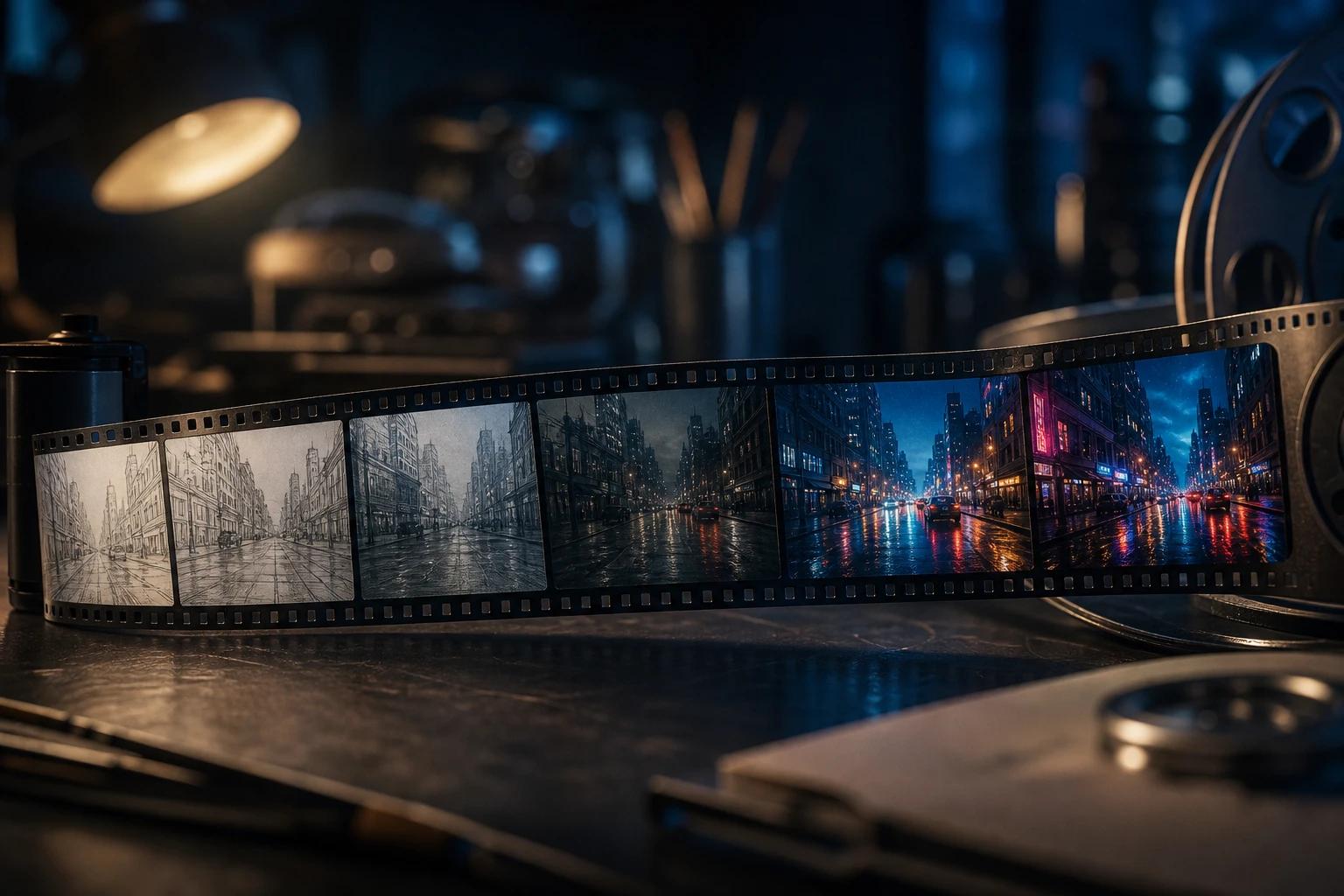
Alibaba shipped six major Wan versions in 18 months, from February 2025 to August 2026. The first two are open source. From Wan 2.5 on, the models are hosted, generate sound, and get longer and more controllable with each release.
| Version | Released | What changed | Longest clip | How it's offered |
|---|---|---|---|---|
| Wan 3.0 | August 2026 | 30-second scenes, documents and web pages as input, video extension | 30 s, 1080p | Hosted API and apps |
| Wan 2.7 | April 2026 | First and last frame control, instruction-based video editing, multi-reference input | 15 s, 1080p | Hosted API and apps |
| Wan 2.6 | December 2025 | Multi-shot storytelling, reference-to-video with a person's look and voice | 15 s, 1080p | Hosted API and apps |
| Wan 2.5 | September 2025 | First Wan with native audio and lip-synced dialogue | 10 s, 1080p | Hosted API and apps |
| Wan 2.2 | July 2025 | Mixture-of-experts design, a 720p model for consumer GPUs | 5 s, 720p | Open weights (Apache 2.0) |
| Wan 2.1 | February 2025 | First open-source release, 14B and 1.3B models | 5 s, 720p | Open weights (Apache 2.0) |
Wan 2.1 (February 2025): the open-source breakthrough
Alibaba open-sourced Wan 2.1 on 25 February 2025. The release had four models: text-to-video at 14 billion and 1.3 billion parameters, plus two 14B image-to-video models for 480p and 720p. The small model needed about 8 GB of graphics memory for a 5-second 480p clip, so it ran on ordinary gaming GPUs. At launch, Wan 2.1 topped the VBench video benchmark with an overall score of 86.22%.
Wan 2.2 (July 2025): mixture of experts
Wan 2.2 arrived on 28 July 2025, again under Apache 2.0. Its main models split the work between two experts: one lays out the scene and motion early in generation, the other refines detail at the end. That adds up to 27B parameters with only 14B active at a time, so it costs about the same to run as Wan 2.1. A compact TI2V-5B model handles both text and image input at 720p and 24 fps on a single card like an RTX 4090. In August 2025, Alibaba added Wan2.2-S2V, which animates a character from an audio file.
Wan 2.2 is still the most-searched Wan version, mostly because it's free to run on your own hardware.
Wan 2.5 (September 2025): native audio
Wan 2.5 was previewed at Alibaba's Apsara conference in late September 2025. It was the first Wan to generate audio and video together: voices, sound effects and music, synced to the action. Clips run up to 10 seconds at 1080p, and you can also feed in an audio track to drive the scene. Wan 2.5 was not released as open weights, which marked the family's shift to hosted models.
Wan 2.6 (December 2025): multi-shot stories
Alibaba announced Wan 2.6 in mid-December 2025. It can split one prompt into several shots while keeping the same characters, and it stretched clips to 15 seconds. It also introduced reference-to-video: upload a short clip of a person and Wan 2.6 casts them in new scenes, with their look and voice.
Wan 2.7 (April 2026): control and editing
Wan 2.7 rolled out in early April 2026 as a suite covering text-to-video, image-to-video, reference-to-video and video editing. It lets you pin both the first and the last frame, combine several reference images and clips in one generation, and edit an existing video with plain instructions such as "change her jacket to red." Clips run 2 to 15 seconds at 720p or 1080p.
Wan 3.0 (August 2026): 30-second scenes
Wan 3.0 entered public beta on 6 August 2026 and launched formally on 24 August. It doubles the longest clip to 30 seconds at up to 1080p, and Alibaba says it keeps faces, layouts and audio steady across shots. It also reads unusual inputs: hand it a PDF, a slide deck, a spreadsheet or a web page and it builds a video from the content. It can extend an existing clip too. Unlike Wan 2.1 and 2.2, its weights are closed.
What Can Wan Do?
The Wan family covers most of what you'd want from an AI video generator. Newer versions add features rather than replace them:
- Text-to-video. Describe a scene and Wan renders it, including camera movement and lighting.
- Image-to-video. Upload a photo as the first frame and Wan animates it. Useful for product shots, portraits and artwork.
- First and last frame. Pin where the clip starts and ends, and Wan fills in the motion between. Good for loops and transitions (Wan 2.7 and 3.0).
- Reference-to-video. Supply images or clips of a character, product or location, and Wan keeps them consistent in a new scene (Wan 2.6 and later).
- Native sound and dialogue. Music, sound effects and speech come out with the picture. Quoted lines are lip-synced (Wan 2.5 and later).
- Multi-shot scenes. One prompt can cover several shots with cuts, keeping characters consistent (Wan 2.6 and later).
- Video editing. Upload a clip and describe a change, such as a new outfit, weather or style. Wan re-renders it with the motion intact (Wan 2.7 and 3.0).
- Video extension. Continue an existing clip forward or backward, up to 30 seconds in total (Wan 3.0).
- Images. Alibaba also ships Wan image models, and Wan Studio has an image mode next to video.
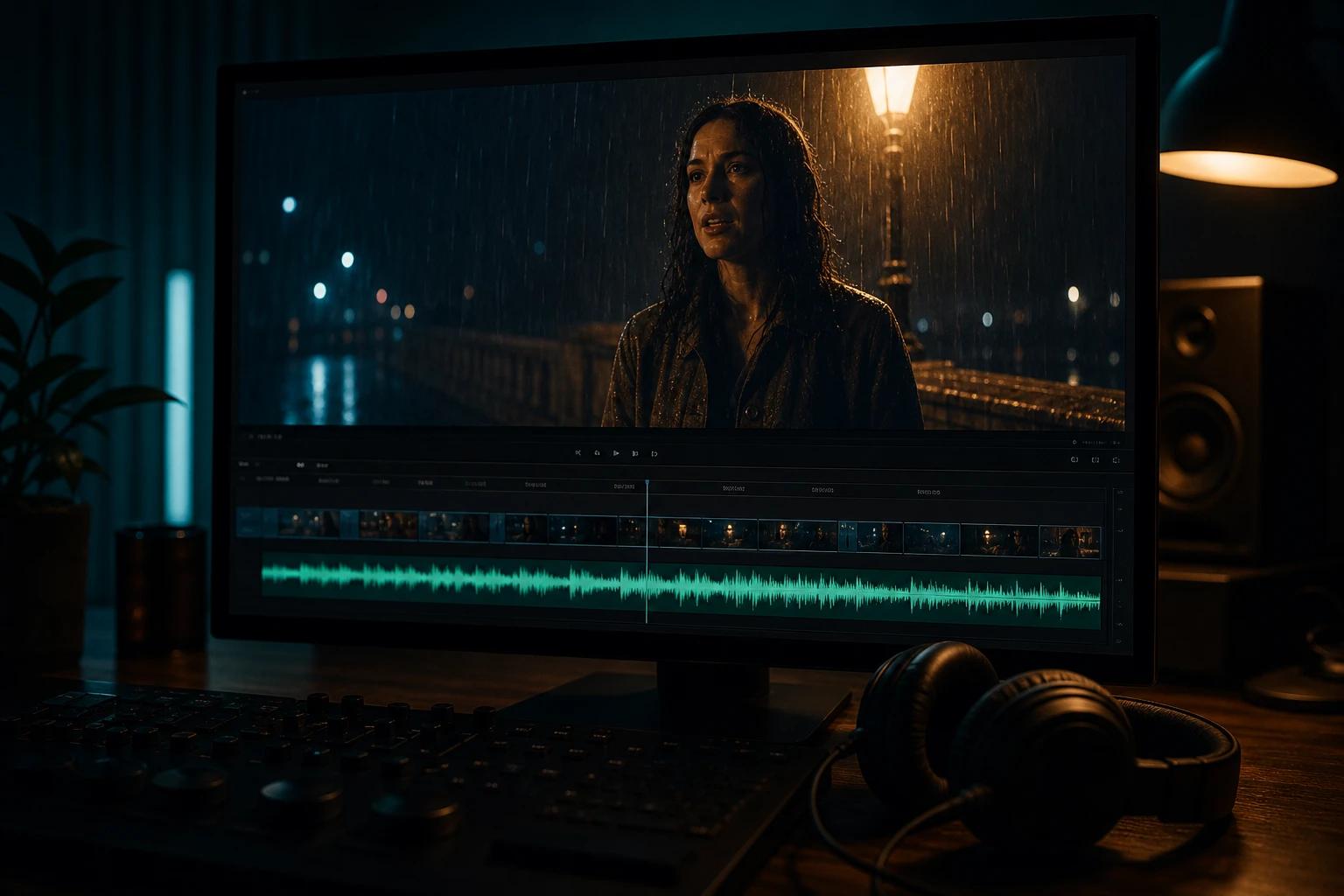
Not every app exposes every feature. On Wan Studio, reference inputs and edit mode run on Wan 2.7, while Wan 3.0 takes a text prompt or a first frame and goes up to 30 seconds.
Is Wan Open Source?
Partly. Wan 2.1 and Wan 2.2, plus spin-offs like Wan2.2-S2V, are open weights under the Apache 2.0 licence, which permits commercial use. You can download them from GitHub, Hugging Face or ModelScope and run them in ComfyUI or Hugging Face Diffusers.
Wan 2.5, 2.6, 2.7 and 3.0 are offered as hosted models through APIs and apps. Alibaba didn't publish Wan 3.0's weights at launch. If you need the newest features, native sound or clips longer than a few seconds, you'll use a hosted version.
Is Wan AI Free?
It can be, depending on how you use it:
- Open weights. Wan 2.1 and 2.2 cost nothing to download. You pay in hardware and setup time. The 1.3B model runs on about 8 GB of graphics memory, the Wan 2.2 TI2V-5B model on a 24 GB card, and the 14B models need more memory or offloading.
- Wan Studio free plan. You get 160 credits a month, enough for up to two Wan 2.5 videos at 480p, with no card and no watermark. See Wan free.
- Paid plans. Wan Studio starts at $14 a month for 2,800 credits, about 39 videos. Paid plans unlock Wan 3.0 and Wan 2.7, 720p and 1080p, and a commercial licence. Alibaba Cloud bills its API per second of video. Compare plans on the pricing page.
How to Access Wan
There are three ways in. Pick by how much setup you want and which features you need.
| Route | Best for | Wan models | What you need |
|---|---|---|---|
| Browser app, such as Wan Studio | Creators, marketers and anyone who wants results fast | Wan 3.0, 2.7, 2.5 | An email address; free plan to start |
| API, such as the Wan API or Alibaba Cloud Model Studio | Developers adding video generation to a product | Latest hosted models | An API key and a paid plan or cloud account |
| Local open weights in ComfyUI or Diffusers | Tinkerers, researchers, offline work | Wan 2.1, 2.2 | An NVIDIA GPU with 8 to 24 GB or more, plus setup time |
For step-by-step instructions on each route, read our guide on how to use Wan. Developers can start with the Wan API.
Which Wan Model Should You Use?
Use Wan 3.0 for anything long or story-driven, Wan 2.7 when you need references or edits, and Wan 2.5 for cheap drafts. The table below matches common goals to the right model.
| If you want to... | Use | Why |
|---|---|---|
| Make a full 15 to 30 second ad or story in one generation | Wan 3.0 | Longest clips, steady characters across shots |
| Keep the same character or product across scenes | Wan 2.7 | Reference images, clips and audio tagged in the prompt |
| Change something in an existing video | Wan 2.7 edit mode | Instruction-based edits that keep the original motion |
| Make a seamless loop or a precise transition | Wan 2.7 | First and last frame control |
| Test ideas cheaply | Wan 2.5 or Wan 2.5 Fast | 5 or 10 second clips, lowest credit cost, on the free plan |
| Run everything on your own hardware | Wan 2.2 locally | Open weights and community add-ons, but no built-in sound |
What People Make With Wan
Most Wan videos are short, practical and made for a feed. Common uses include:
- Video ads and product spots. A product photo becomes the first frame, and Wan adds motion, music and a voice line. See our roundup of AI product video generators.
- Social content. Vertical 9:16 clips for TikTok, Reels and YouTube Shorts. More in AI video generators for TikTok.
- Talking characters and explainers. Quoted dialogue gets lip-synced, so a portrait can deliver a line. Learn how to make a picture talk.
- Music videos. Score and sound effects are generated with the cuts, so the edit lands on the beat.
- Short films and storyboards. Multi-shot scenes with consistent characters let you pitch or pre-visualize a story.
- Business explainers. Wan 3.0 on Alibaba's platform can turn a slide deck or report into a short video.
Limitations to Know
Wan is strong, but it isn't magic. Plan around these limits:
- Artifacts still happen. Hands, very fast motion and crowded scenes can break. Expect to generate a few takes.
- On-screen text is approximate. Signs and labels may come out garbled, so add exact text in your editor.
- Lip sync favors short lines. One or two sentences per speaker sync better than a long speech.
- Length and resolution cost more. A 30-second 1080p clip uses far more credits than a 5-second 480p draft.
- The newest models are closed. You can't fine-tune or self-host Wan 2.5 and later.
- Likeness and rights matter. Use faces, voices, music and brands you have permission to use, and expect platforms to block some requests.
Frequently Asked Questions
What does Wan stand for?
Wan comes from Tongyi Wanxiang (通义万相), the Chinese name of Alibaba's visual generation models. "Wanxiang" loosely means "ten thousand forms." It isn't an acronym, so you'll see it written as Wan, not WAN.
Who owns Wan AI?
The Wan models are developed by Alibaba's Tongyi Lab. Apps such as Wan Studio give you access to them; Wan Studio is independent and not affiliated with Alibaba.
What is the latest Wan model?
Wan 3.0, launched in August 2026. It makes clips up to 30 seconds at 1080p with native sound and steady characters across shots. Wan 2.7 remains the go-to for reference inputs and video editing.
Is Wan AI free?
The open-source Wan 2.1 and 2.2 are free to download and run on your own GPU. In a browser, Wan Studio's free plan gives you up to two Wan 2.5 videos a month at 480p with no card required. Wan 3.0 and Wan 2.7 need a paid plan.
Is Wan open source?
Wan 2.1 and Wan 2.2 are open source under Apache 2.0. Wan 2.5, 2.6, 2.7 and 3.0 are hosted models available through apps and APIs, and their weights aren't public.
Can Wan generate videos with sound?
Yes, from Wan 2.5 onward. Music, sound effects and dialogue are generated in the same pass as the picture. Put a character's line in quotes and it's spoken with matching lip movement. The open-source Wan 2.1 and 2.2 text- and image-to-video models are silent.
What's the difference between Wan 2.2 and Wan 3.0?
Wan 2.2 is an open-source model you can run locally, making silent clips of about 5 seconds at up to 720p. Wan 3.0 is hosted, makes up to 30 seconds at 1080p, generates sound and dialogue, and handles multi-shot scenes.
Can I use Wan videos commercially?
The Apache 2.0 licence on Wan 2.1 and 2.2 allows commercial use. For hosted versions, check your platform's terms. On Wan Studio, every paid plan includes a commercial licence; the free plan is for trying the models.
Conclusion
Wan has grown from an open-source research release into one of the most capable AI video families available, with sound, multi-shot scenes and 30-second clips. The easiest way to see what it can do is to try it: start free on Wan Studio, write one short scene, and generate. When you're ready to get better results, read our Wan prompt guide.


